


Low GDD mirrors
After having managed to produce short laser pulses, it is necessary to propagate these pulses without disturbing the temporal beam profile. This is the moment where low dispersive beam steering mirrors enter the game.
Often metal mirrors like gold or special enhanced silver mirrors are the most economical solution while having low dispersion.
The major drawbacks of these mirrors are limited reflectivity and higher absorption losses, which may cause problems in applications with high average power.
Alternatively dielectric mirrors can be optimized for low GDD. They offer very low losses avoiding thermal problems but normally have a near-zero GDD only for a limited spectral bandwidth. To overcome this, it is possible to make use of the concept of chirped mirror pairs.
In general, the difference in the refractive index of the applied coating materials determines the spectral width of the low GDD. The greater the difference, the higher the possible bandwidth.
Every coating material has a fixed optical band gap value. The higher the refractive index, the lower the value. Unfortunately, this is also linked to the LIDT and a low optical band gap correlates with a low LIDT.
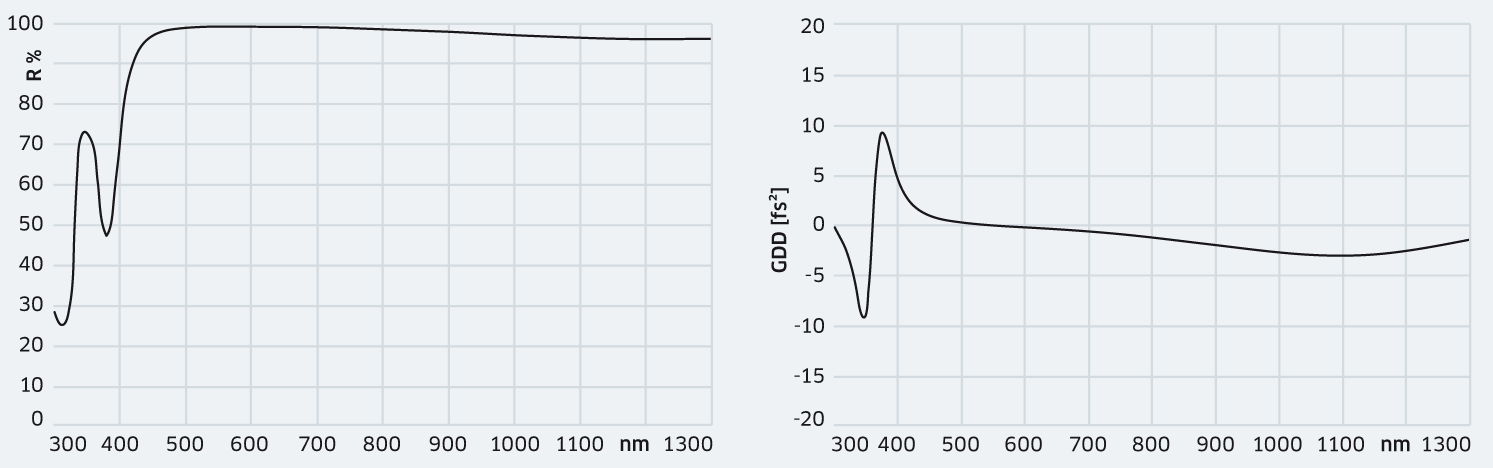
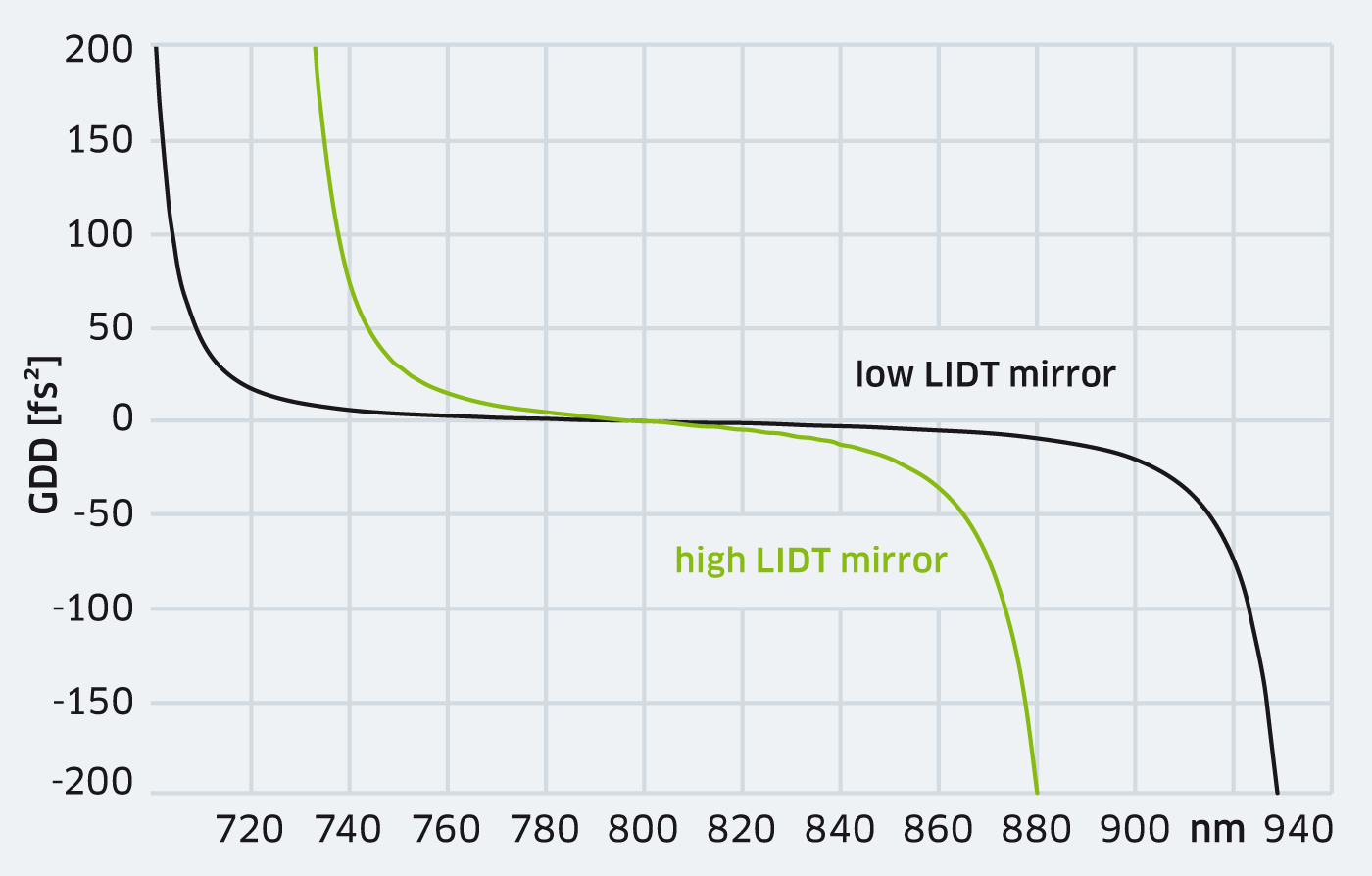 Therefore, spectral broadband low GDD mirrors come along with a lower LIDT compared to ones with a narrower spectral width. For example, this diagram shows the GDD-curves of two mirrors which have the same coating design but use different standard coating materials.
IBS offers extended strategies to deposit more complex designs with improved LIDT and the highest possible spectral width for low GDD mirrors.
All low GDD coatings can be designed on customer request, see examples:
Examples
If not mentioned otherwise, all values and diagrams are given
... for the standard substrate material used in the described wavelength area (mostly Fused Silica or CaF2).
... without consideration of the rear surface.
... with EBE coating technique for a good cost-performance ratio.
Customized coatings are available for all types.
–––– dashed lines show the zoomed curve with the stated magnification
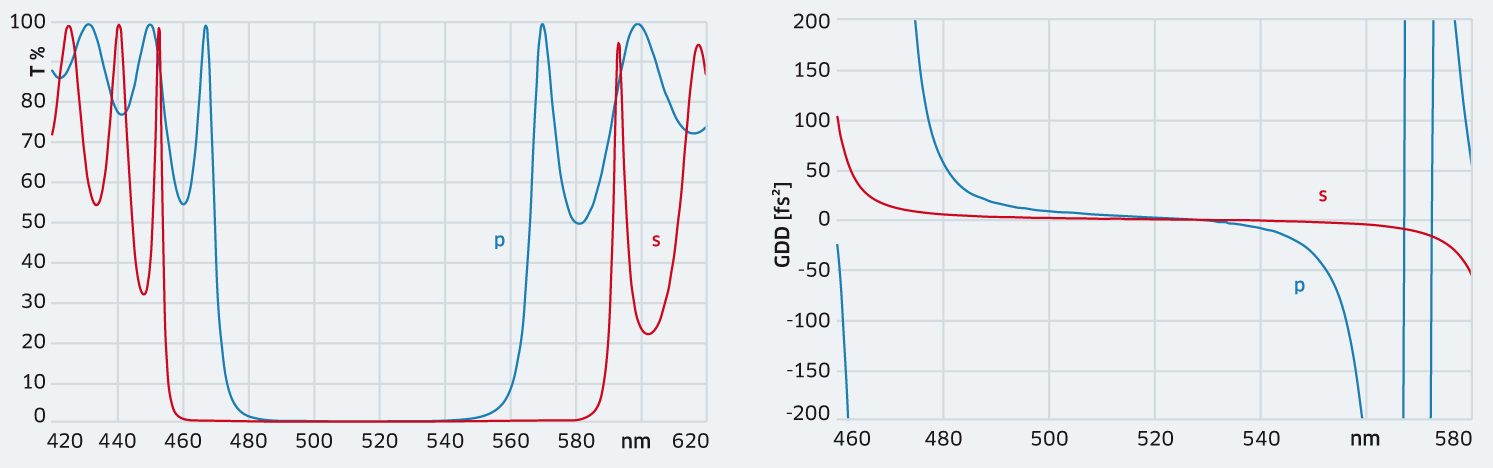
500–530 nm: Rs,p > 99.5%; target | GDD (R) | < 20 fs²; 515 nm: Rs,p > 99.8% (IBS-coating)
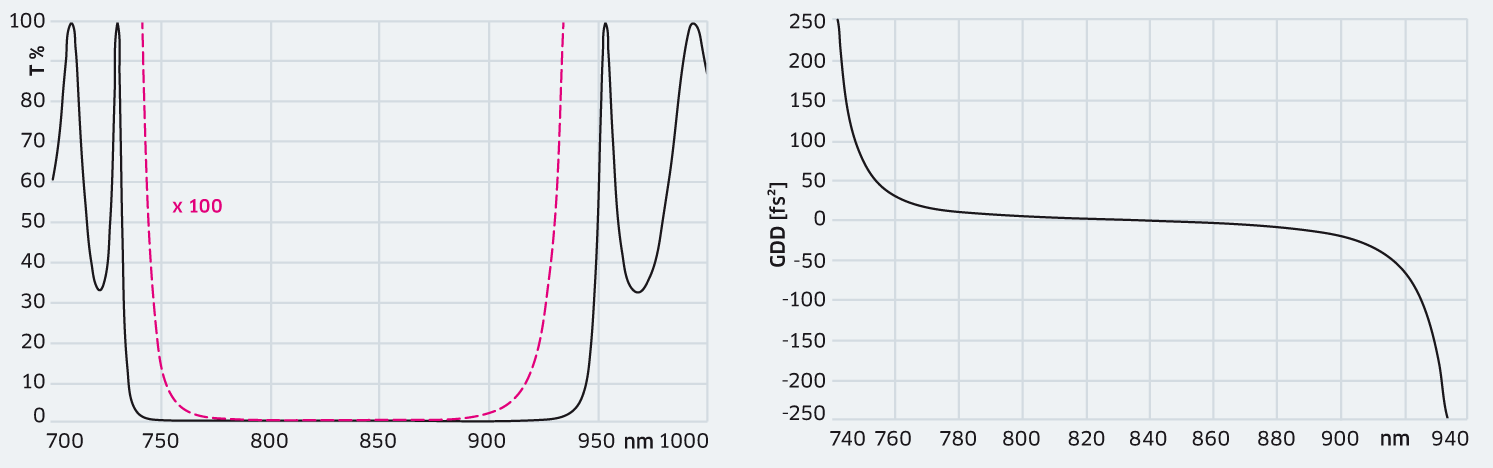
Please note: Optimized for highest power in ultrashort pulsed regime with > 0.9 J/cm² at 42 fs, 1 kHz. Developed for HAPLS at ELI Beamlines.
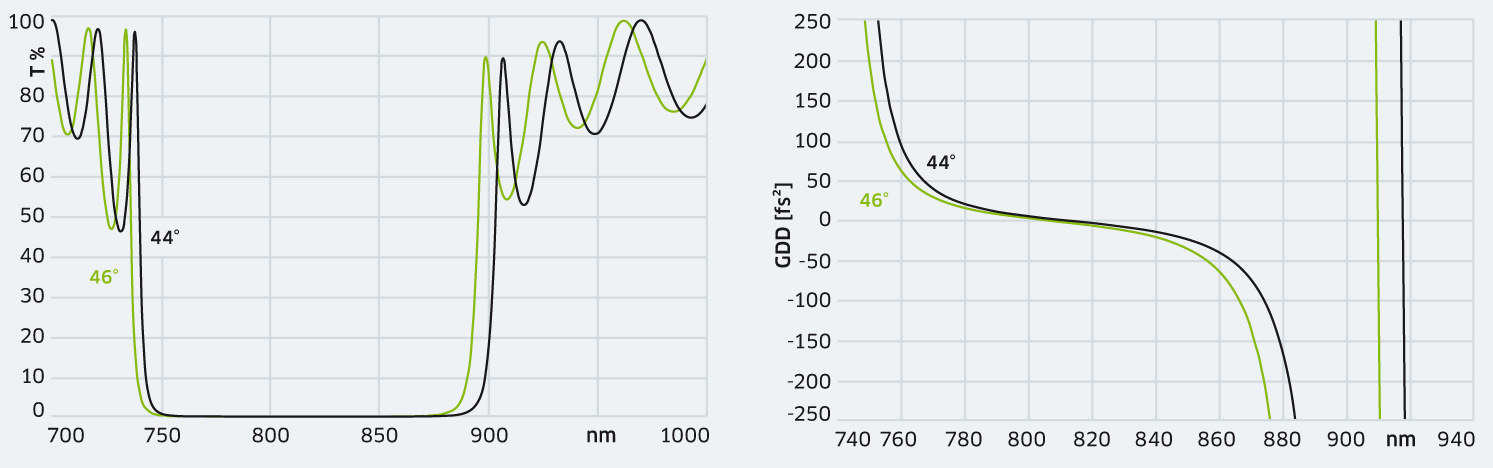
770–850 nm: Rs > 99.9%, Rp > 99.8%; | GDD (Rs,p) | < 50 fs² (IBS-coating)
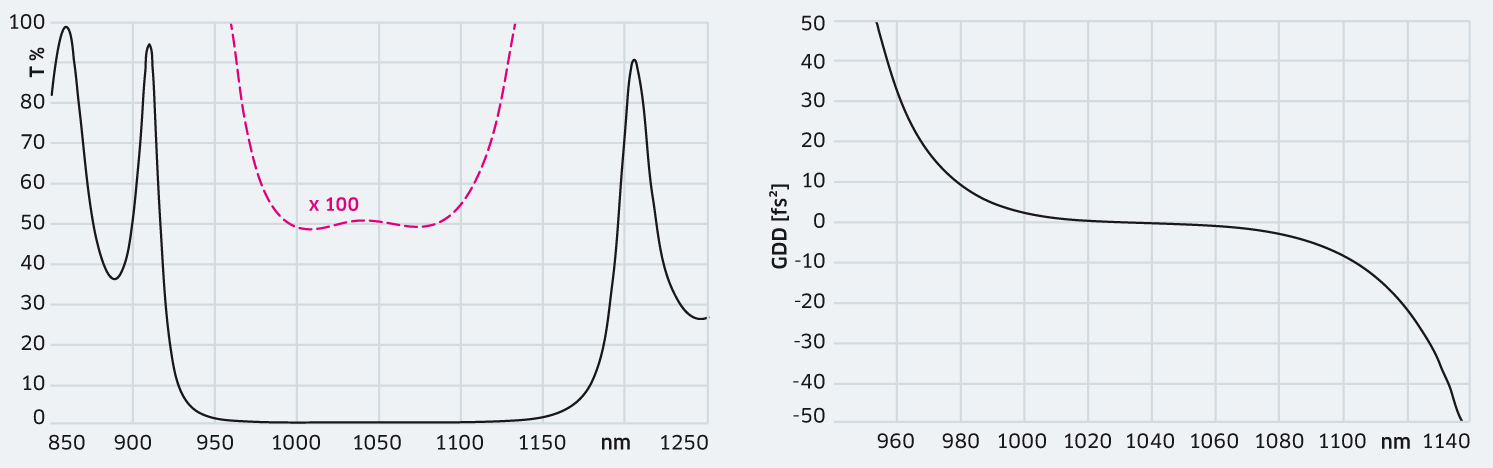
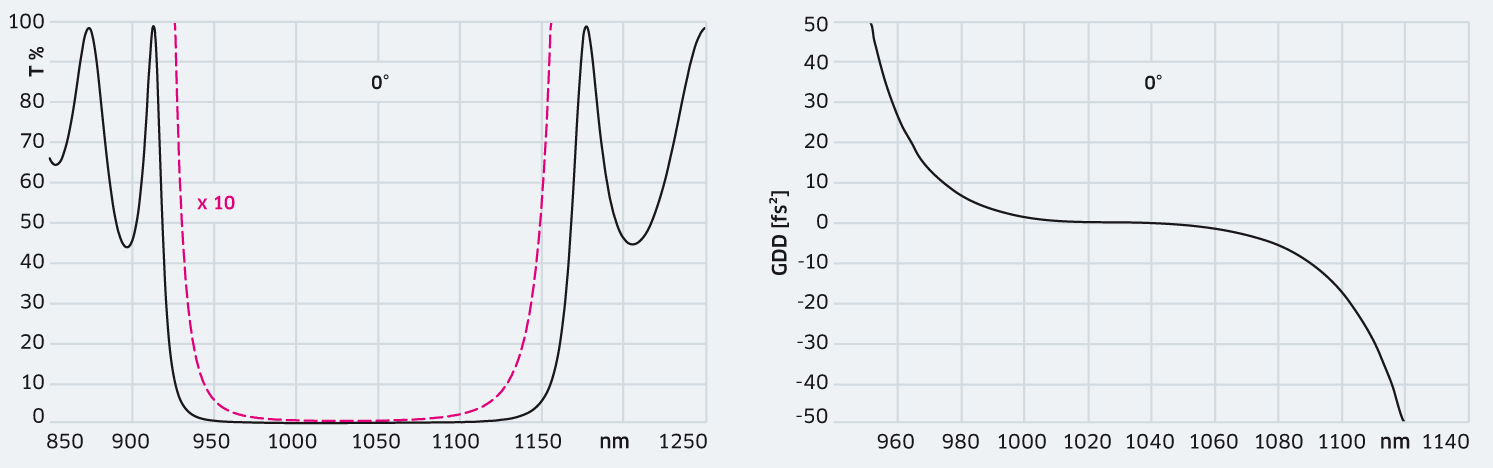
1020–1040 nm: R > 99.9%; | GDD (R) | < 20 fs² (IBS-coating)
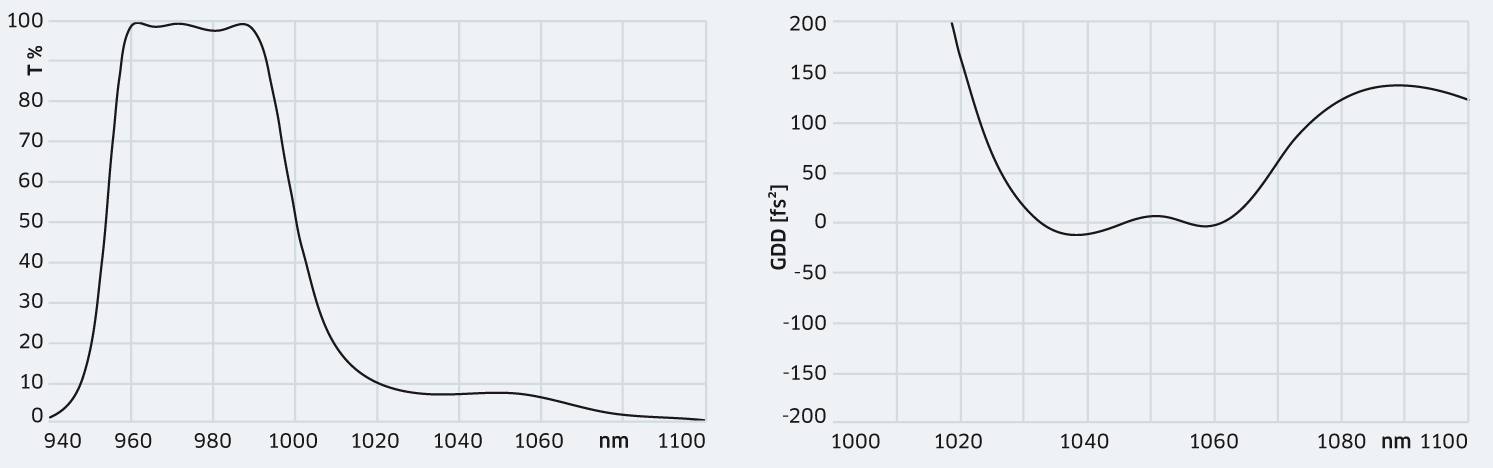
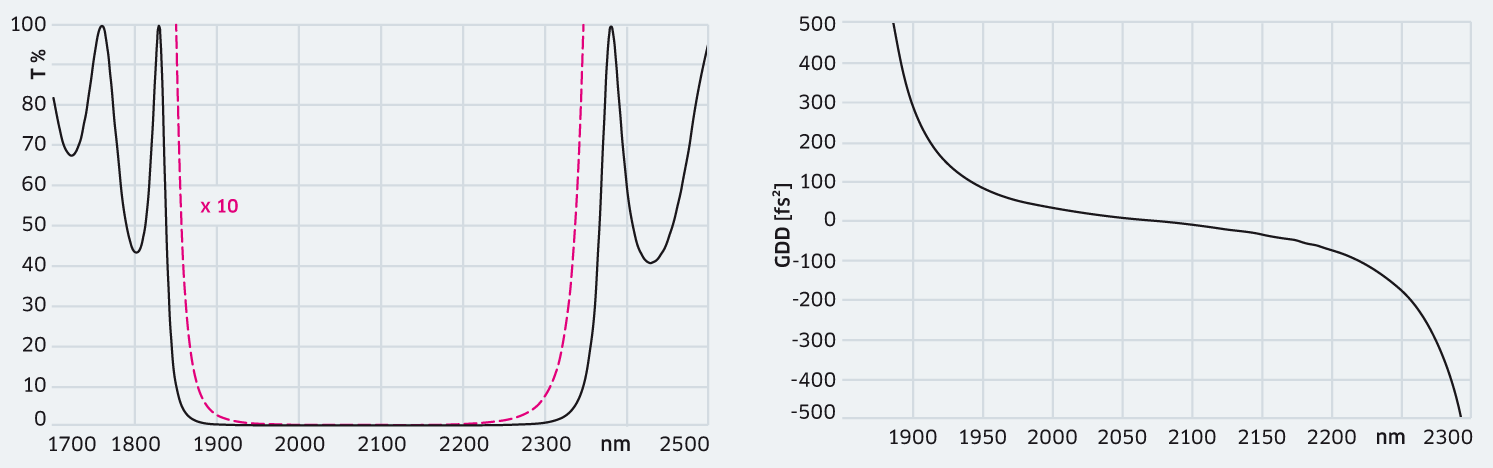
Every coating type can be optimized
for every
• substrate material
• wavelength
• reflection/transmis-
sion value
• angle of incidence
• polarization
• GDD value
• ...
Alternatively we can create
a totally new design for you.
