


Multiline and complex filter coatings

- VAR
- DAR
- TAR
- BBAR
- MAR
- WAR

- HR
- DHR
- BBHR
- MHR
- WHR
- Metal

- LP
- SP
- NF
- MP
- BP
- REF
The growing laser market requires more and more complex coatings working simultaneously at many different wavelengths with different optical requirements.
Besides standard multi-line coatings described in previous chapters, e.g. "Combinations of harmonics" and "OPO", LASEROPTIK offers customized coatings.
For difficult multi-line coatings normally IBS will be the appropriate coating technique of choice as it combines highest precision in film growth and thermal stability.
Besides transmission or reflection of course other optical properties like GD or GDD can be optimized, see item "Dispersive coatings".


Sometimes it is necessary to use different filter coatings on a pair of substrates or on the front and rear surface of an optic.
The example above has a broadband long wave pass coated on the front and a gain flattener on the rear surface for superposition of the deuterium and halogen lamp spectra. As shown, the measured reflection (red line) complies with the computed values (black line). This proofs the high precision of the IBS-coating technique.
All values are given for standard coatings. Customized coatings available for all types.
Coating methods available:


Examples
If not mentioned otherwise, all values and diagrams are given
... for the standard substrate material used in the described wavelength area (mostly Fused Silica or CaF2).
... without consideration of the rear surface.
... with EBE coating technique for a good cost-performance ratio.
Customized coatings are available for all types.
–––– dashed lines show the zoomed curve with the stated magnification
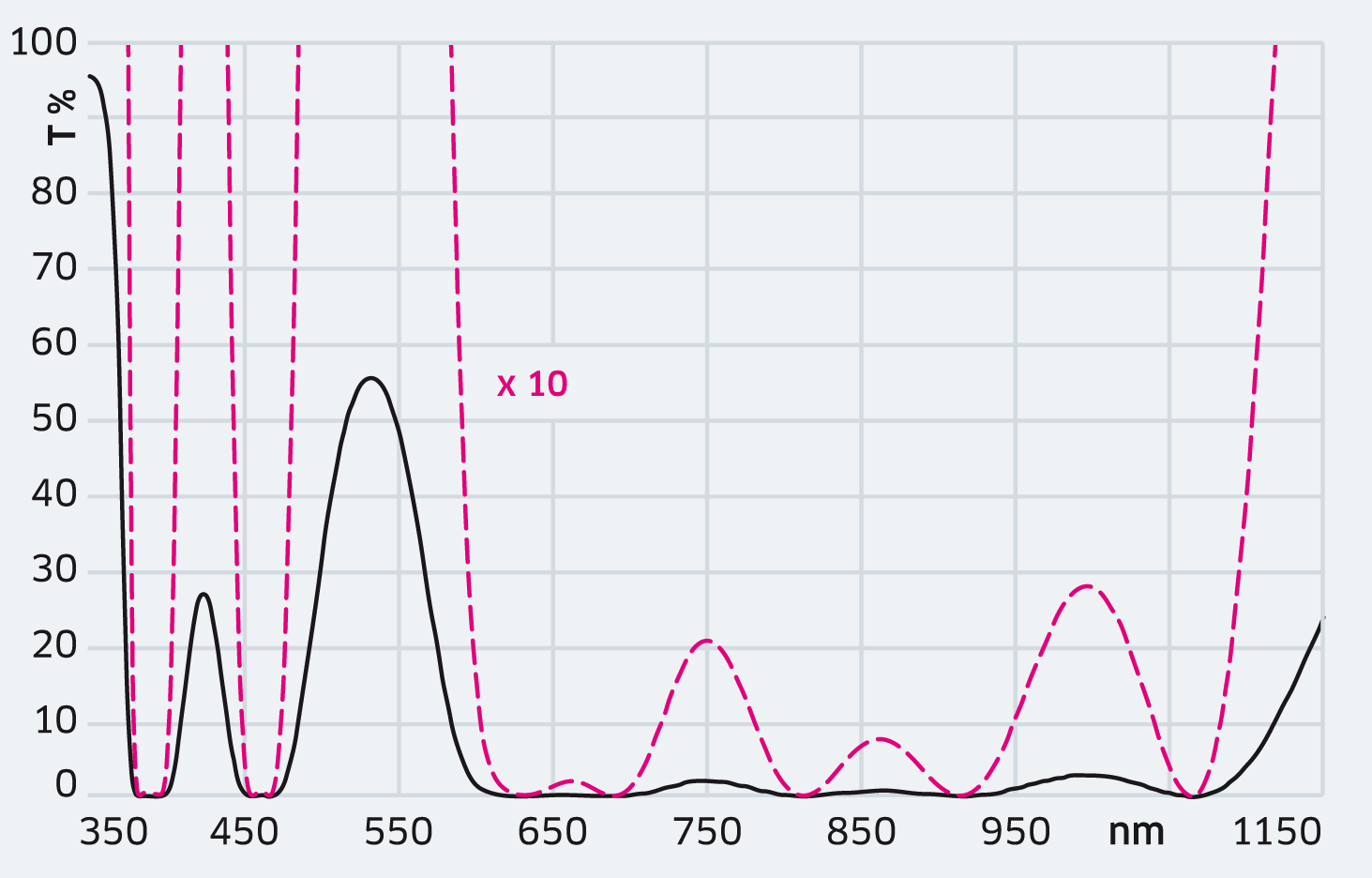
389 nm: R < 1%; 461 nm: R < 0.4%; 633 nm + 650 nm + 689 nm + 813 nm + 914 nm + 1064 nm: R < 0.25%
(IBS-coating)
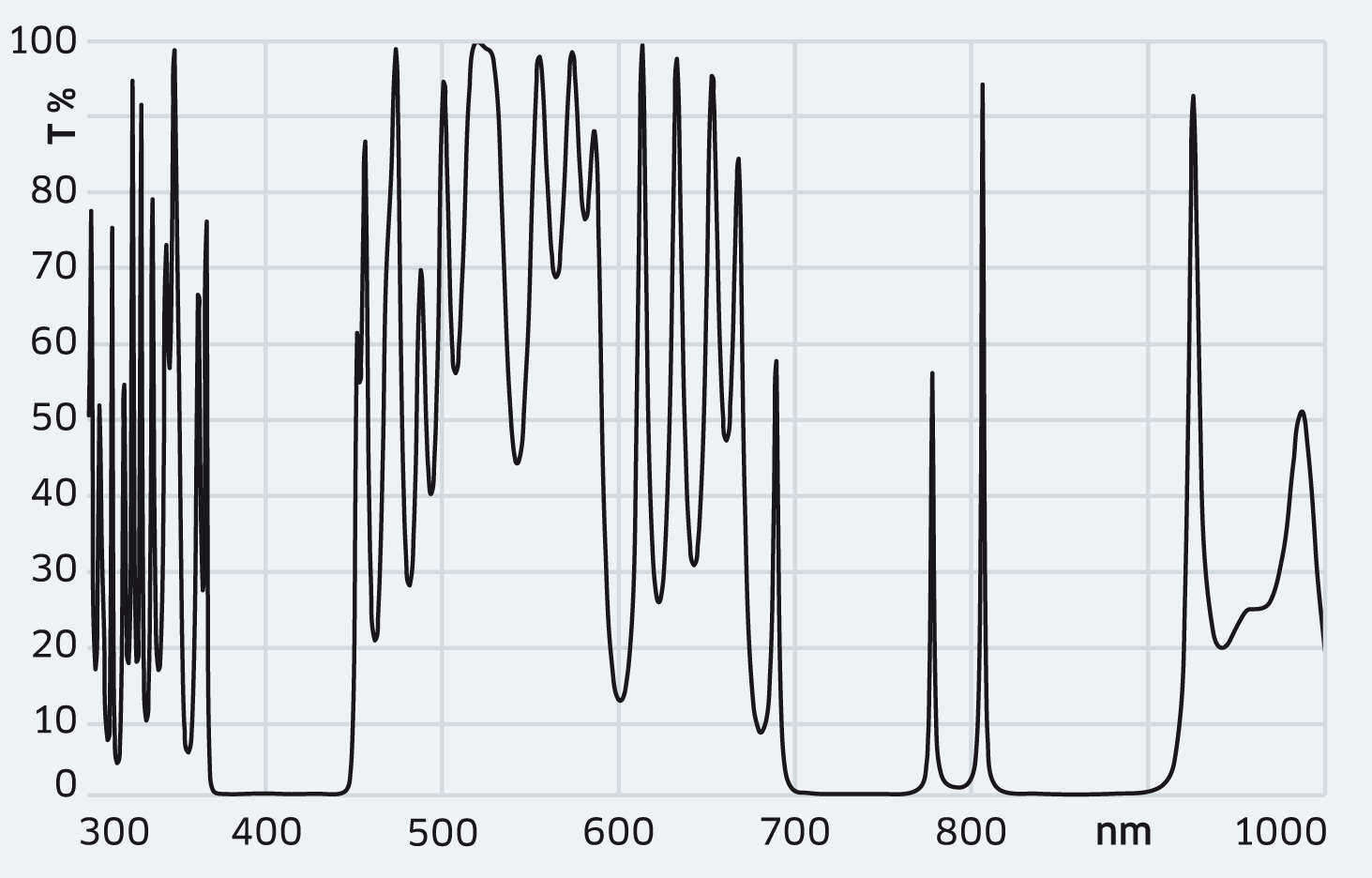
393 nm + 397 nm + 422 nm + 729 nm + 854 nm + 866 nm: R > 99.8%; T > 500ppm (IBS-coating)
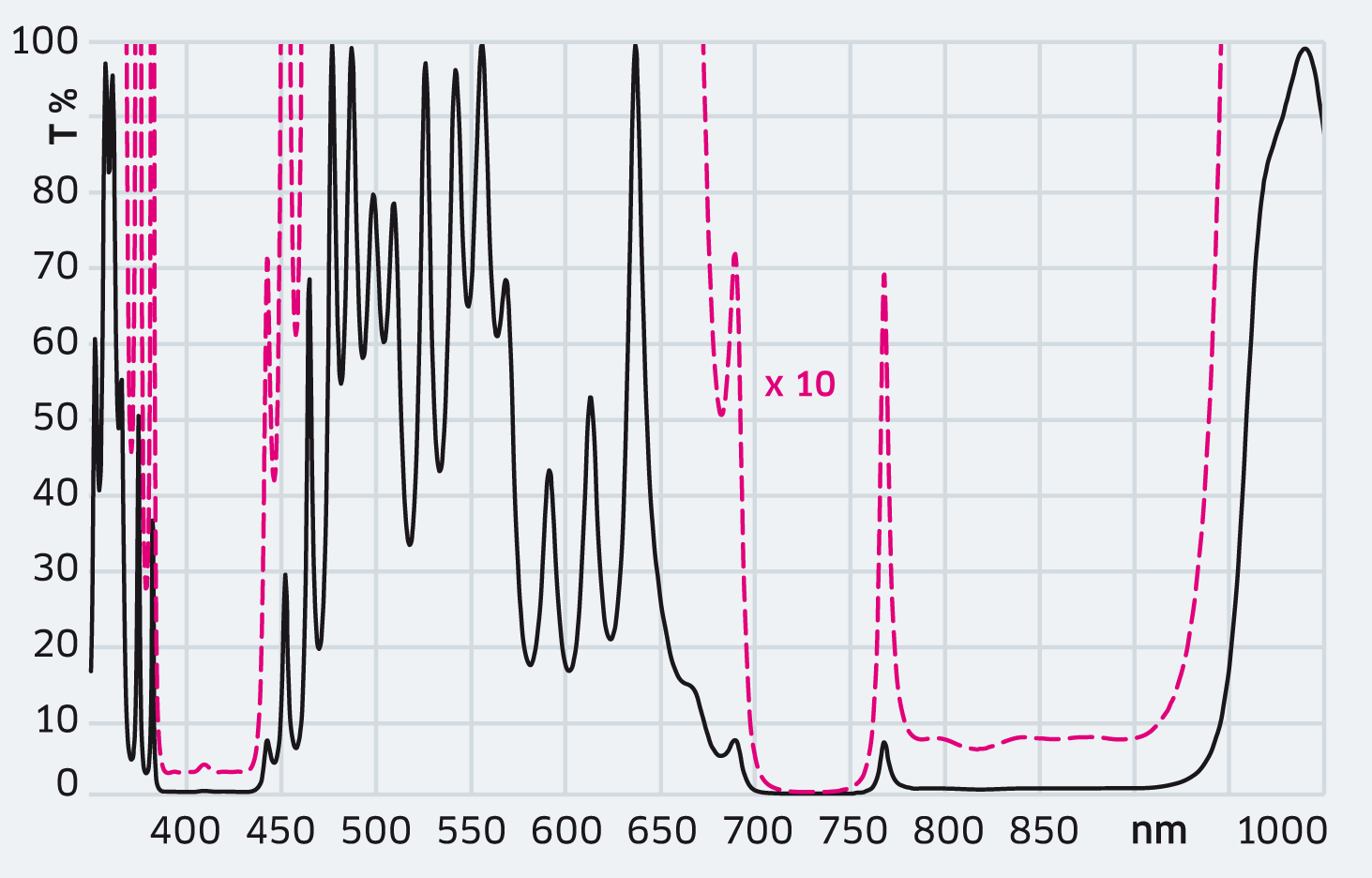
397 + 423 nm: R = 99.7 ±0.1%; 729 nm: R = 99.97 +0.01 / -0.02% (best effort); 794 nm: R = 99.26 ±0.4%; 854 + 866 + 895 nm: R = 99.26 ±0.2% (IBS-coating)
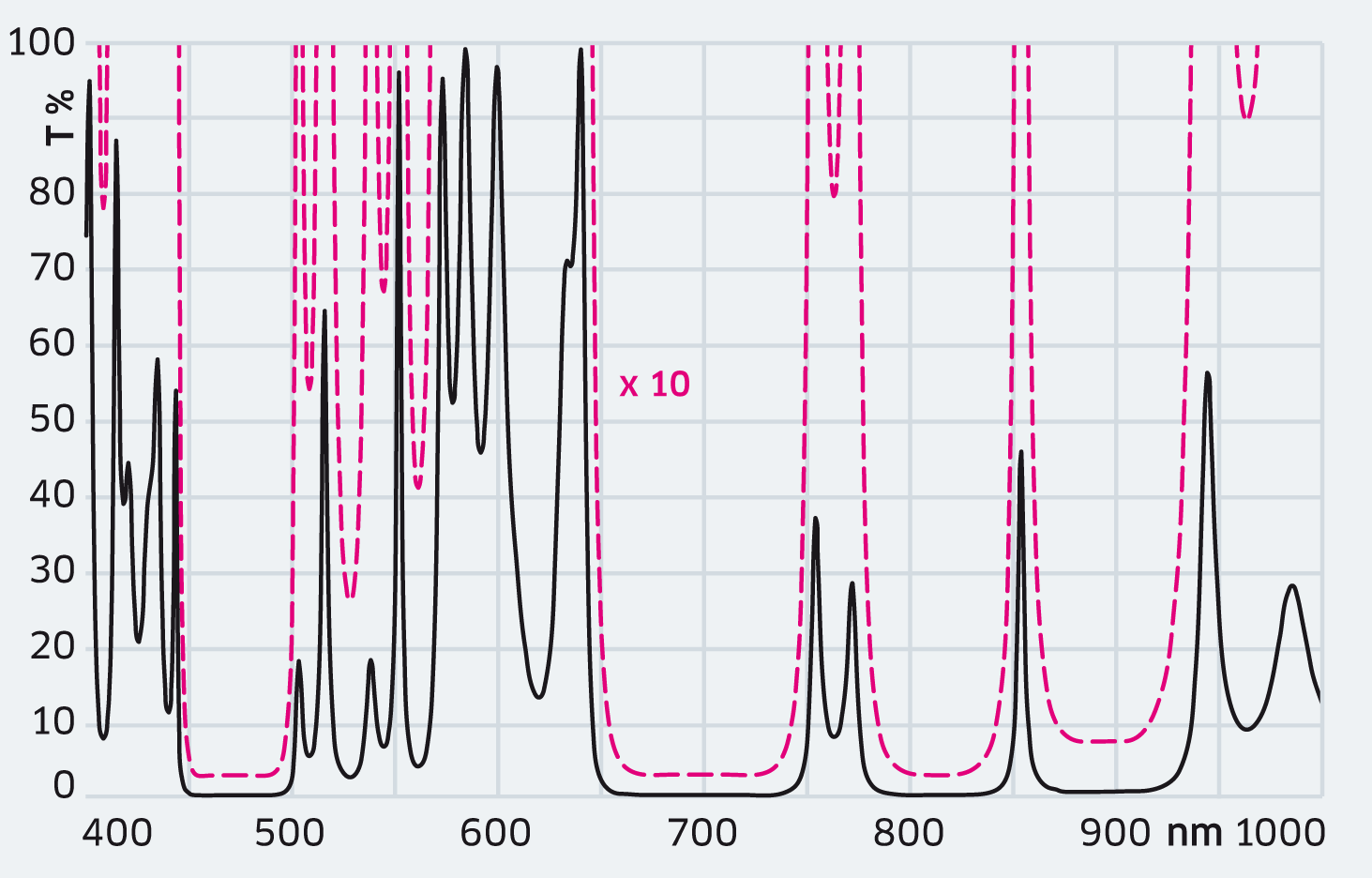
461 nm: R = 99.7 ±0.13%; 480 nm: R = 99.7 ±0.12%;
679 nm: R = 99.7 ±0.1%; 707 nm: R = 99.7 ±0.13%;
813 nm: R = 99.7 ±0.1%; 895 nm: R = 99.26 ±0.3%
(IBS-coating)

1064–1079 nm: R ±2% vs. curve; 1320–1340 nm +
1430–1450 nm: R ±5% vs. curve (IBS-coating)

500 nm: T ±2%; linear progress with about (avg) ±2% vs. curve; 800 nm: T > 98% (IBS-coating)

360–390 nm: T < 1%; 410–680 nm: gain flattening filter;
720–1100 nm: T < 1% (IBS-coating)
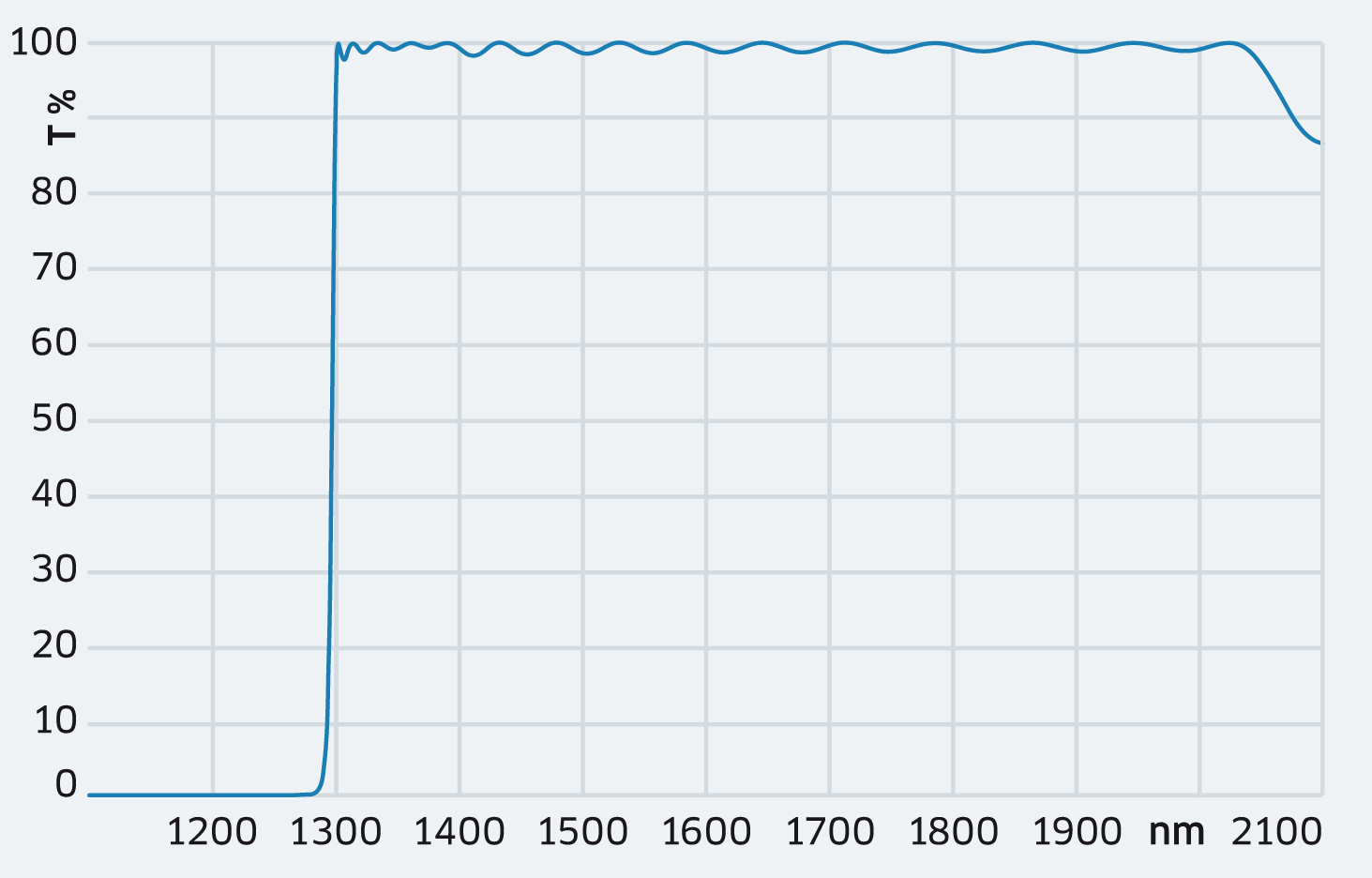
1190-1290 nm: Rp,avg > 99.7%; 1300-2000 nm:
Rp,avg < 1%; Tilting ±15° shifts the edge by ±85nm
(IBS-coating)
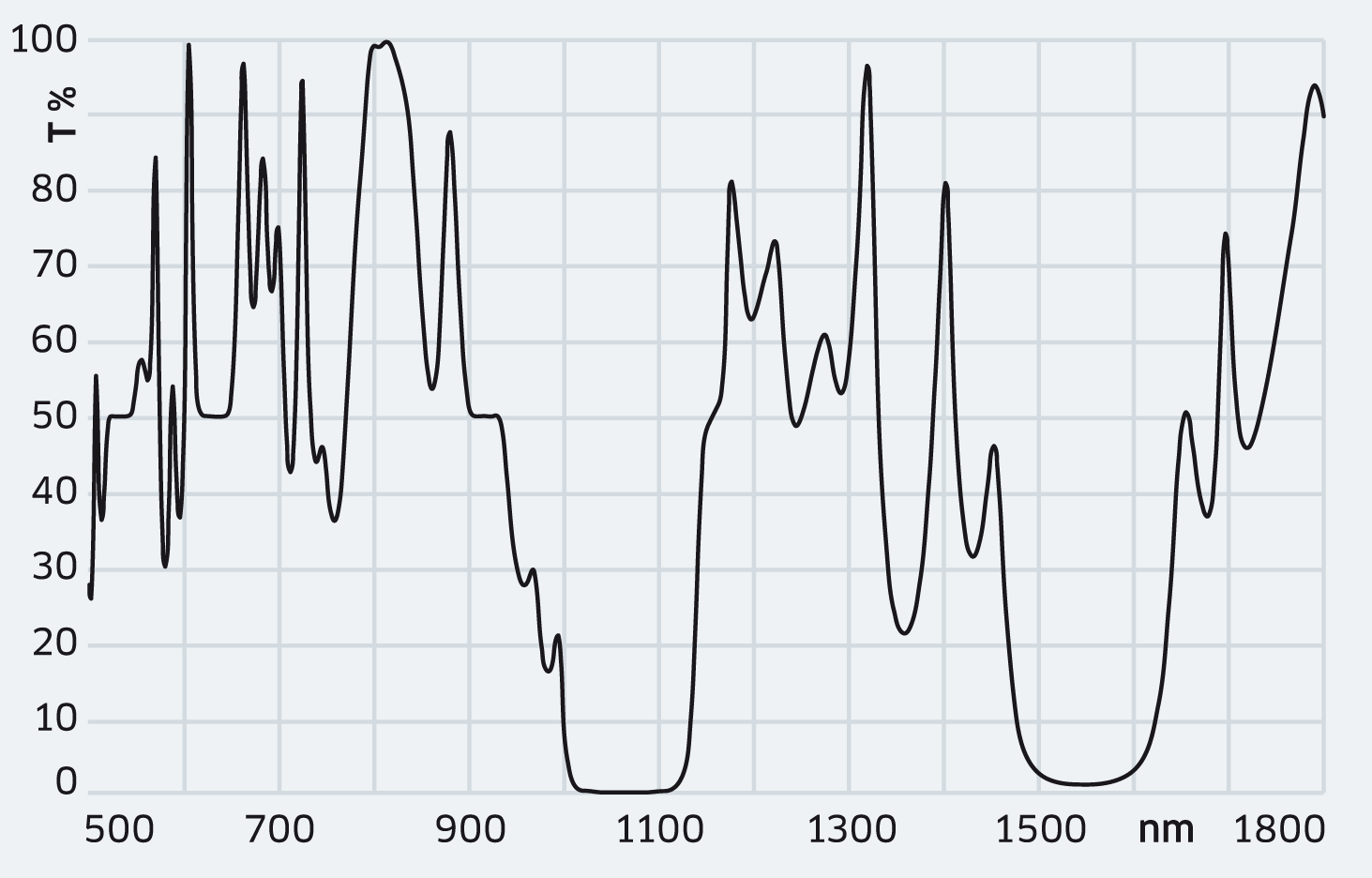
532 nm + 632 nm: R ±3%; 808 nm: R < 2%; 915 nm: R ±3%; 1060 nm: R > 99.9%; 1550 nm: R > 98%
(IBS-coating)
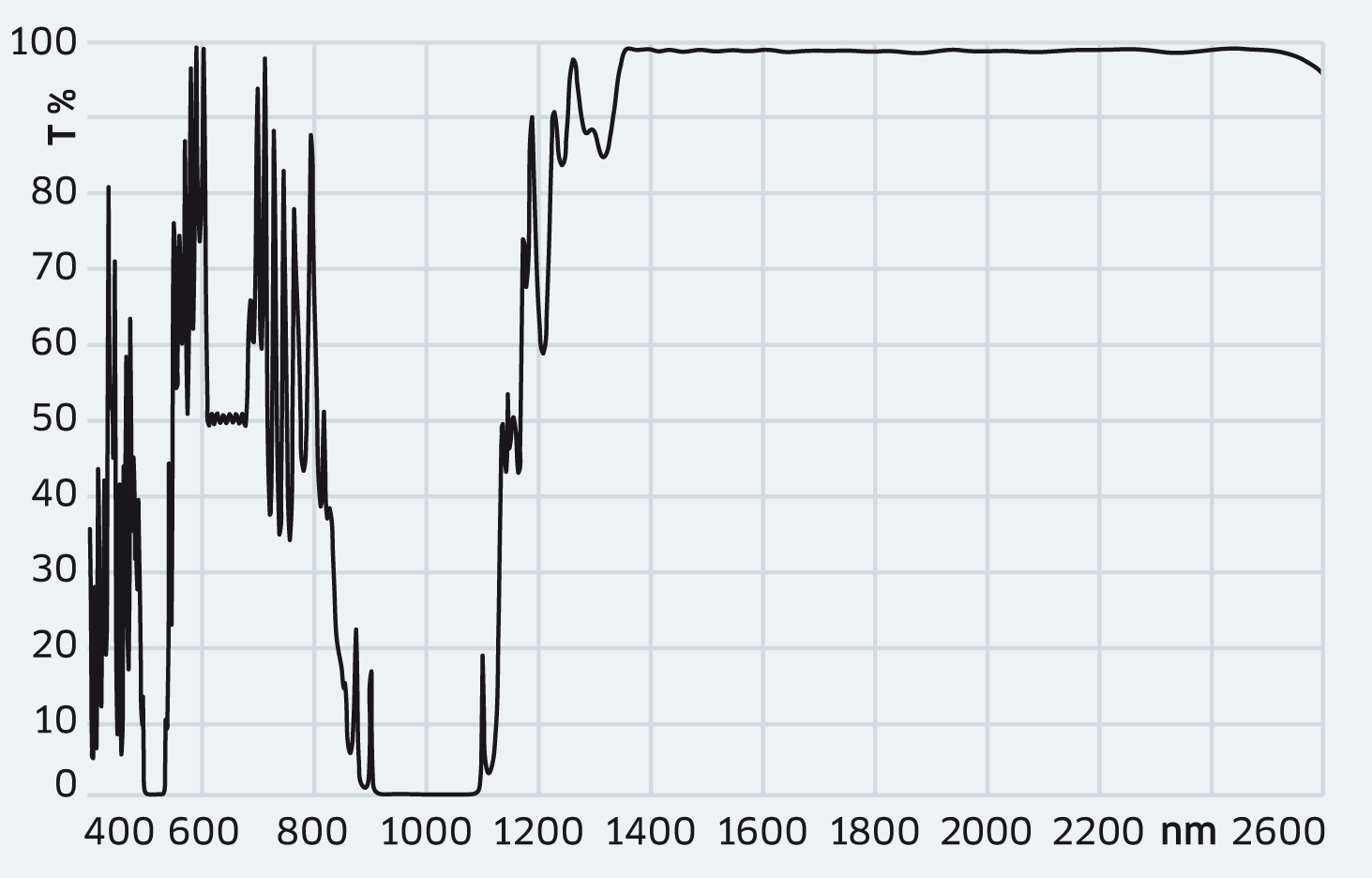
515 nm: R > 99.7%; 630-660 nm: R ±20%; 1030 nm: R > 99.8%; 1400-2400 nm: R < 5% (IBS-coating)
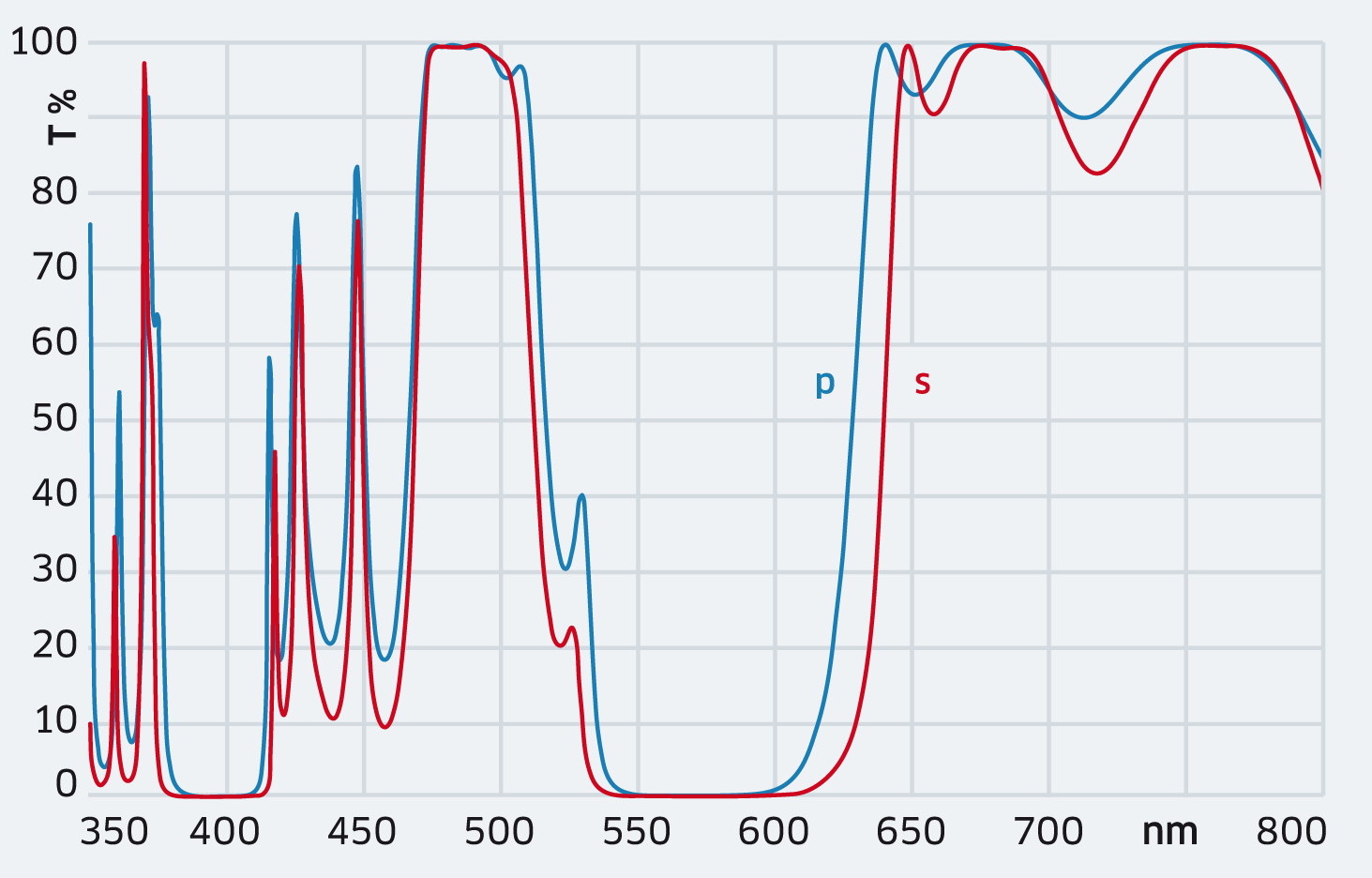
399 nm: Rs,p > 99.5%; 486 nm: Rp < 2%, Rs < 3%;
556 nm: Rp > 99.7%, Rs > 99.9%; 680 nm: Rs,p < 2%;
759 nm: Rs,p < 2% (IBS-coating)
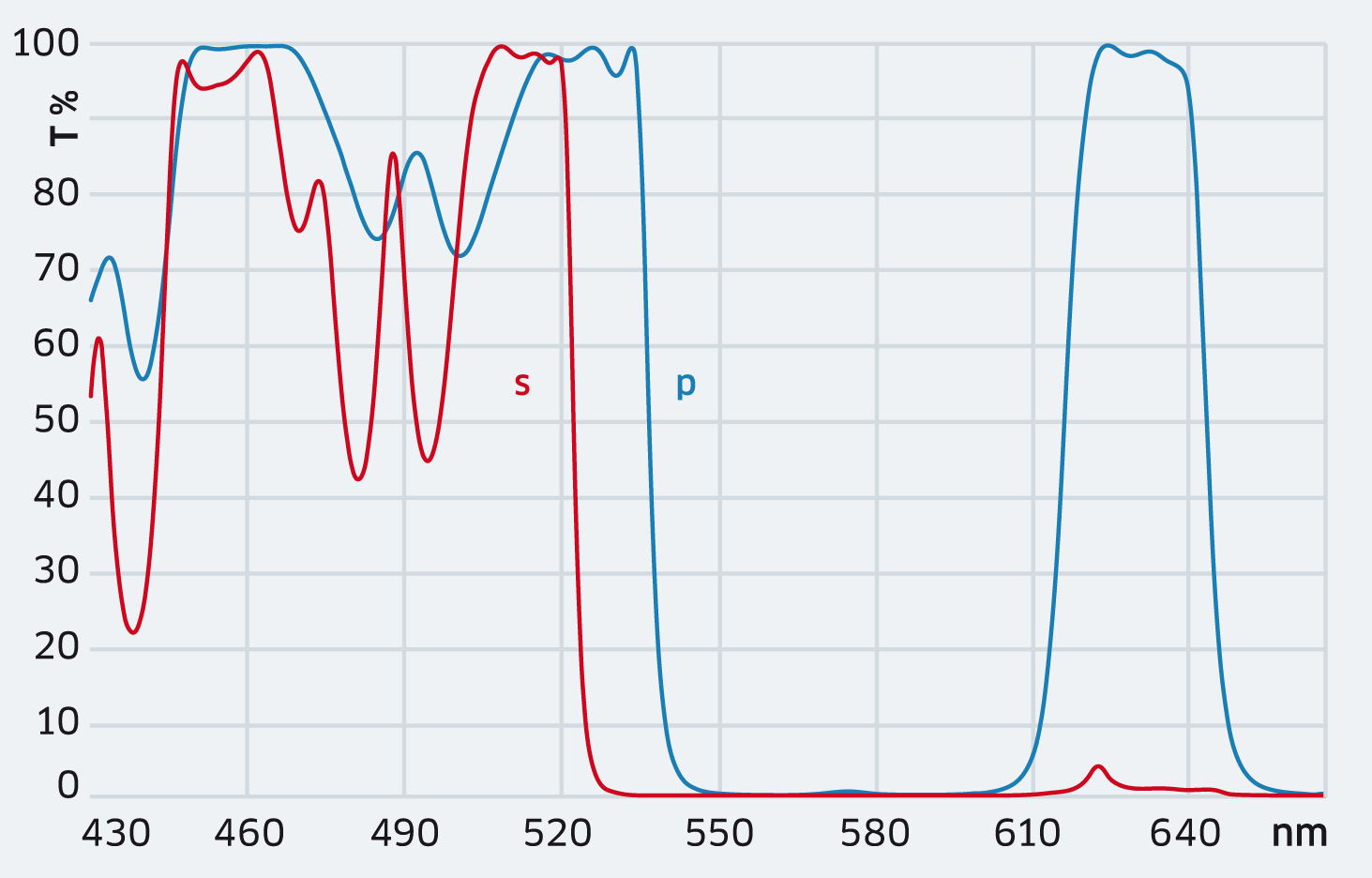
460 nm: Rp < 2%; 525 nm: Rp < 8%; 532 nm: Rs > 98.5%; 630 nm: Rp < 8%; 637 nm: Rs > 97% (IBS-coating)
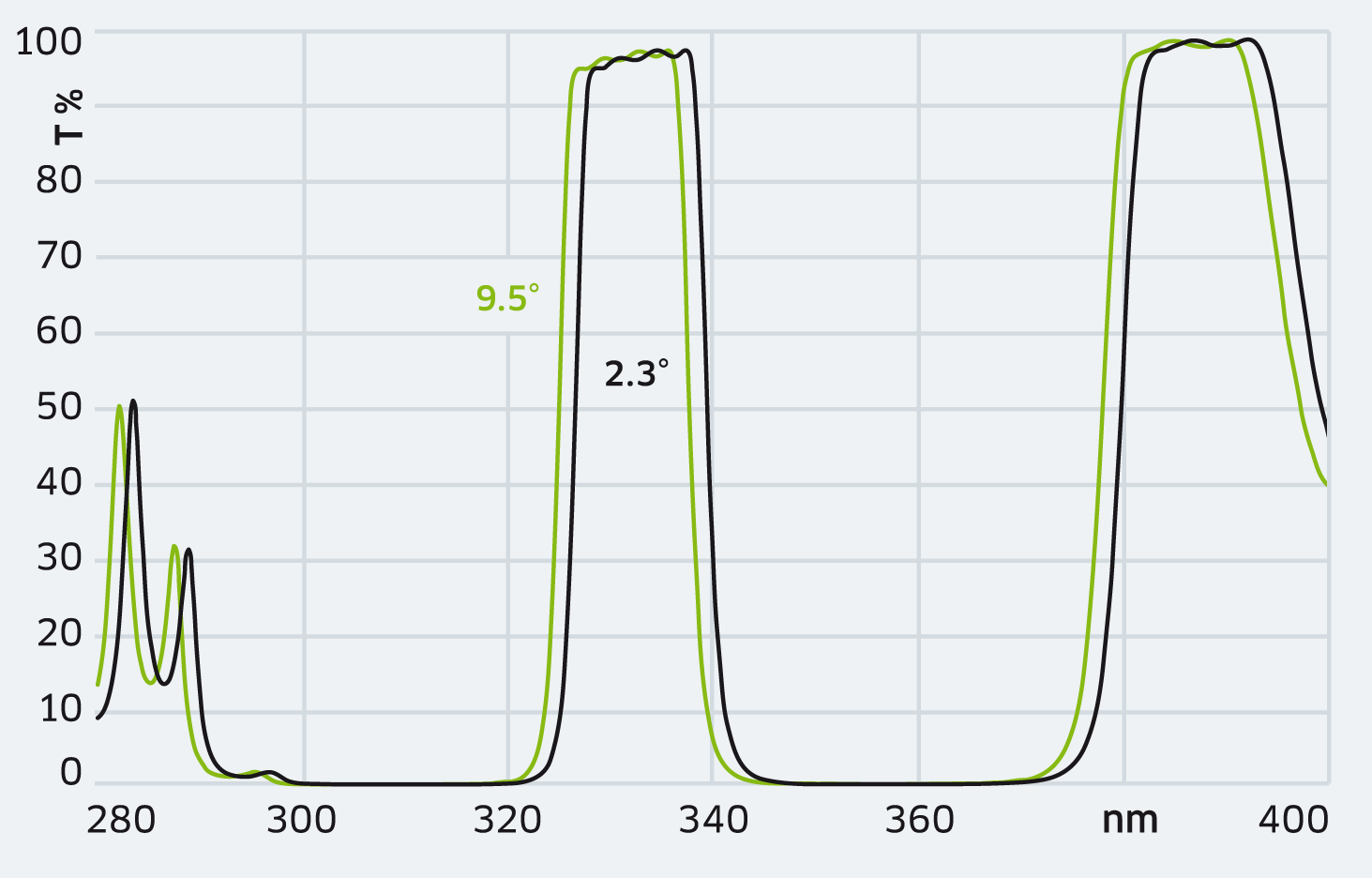
308 nm: T < 0.1%; 332 nm: T > 80% (goal: T > 95%);
355 nm: T < 0.1%; 387 nm: T > 90% (goal: T > 97%)
(IBS-coating)
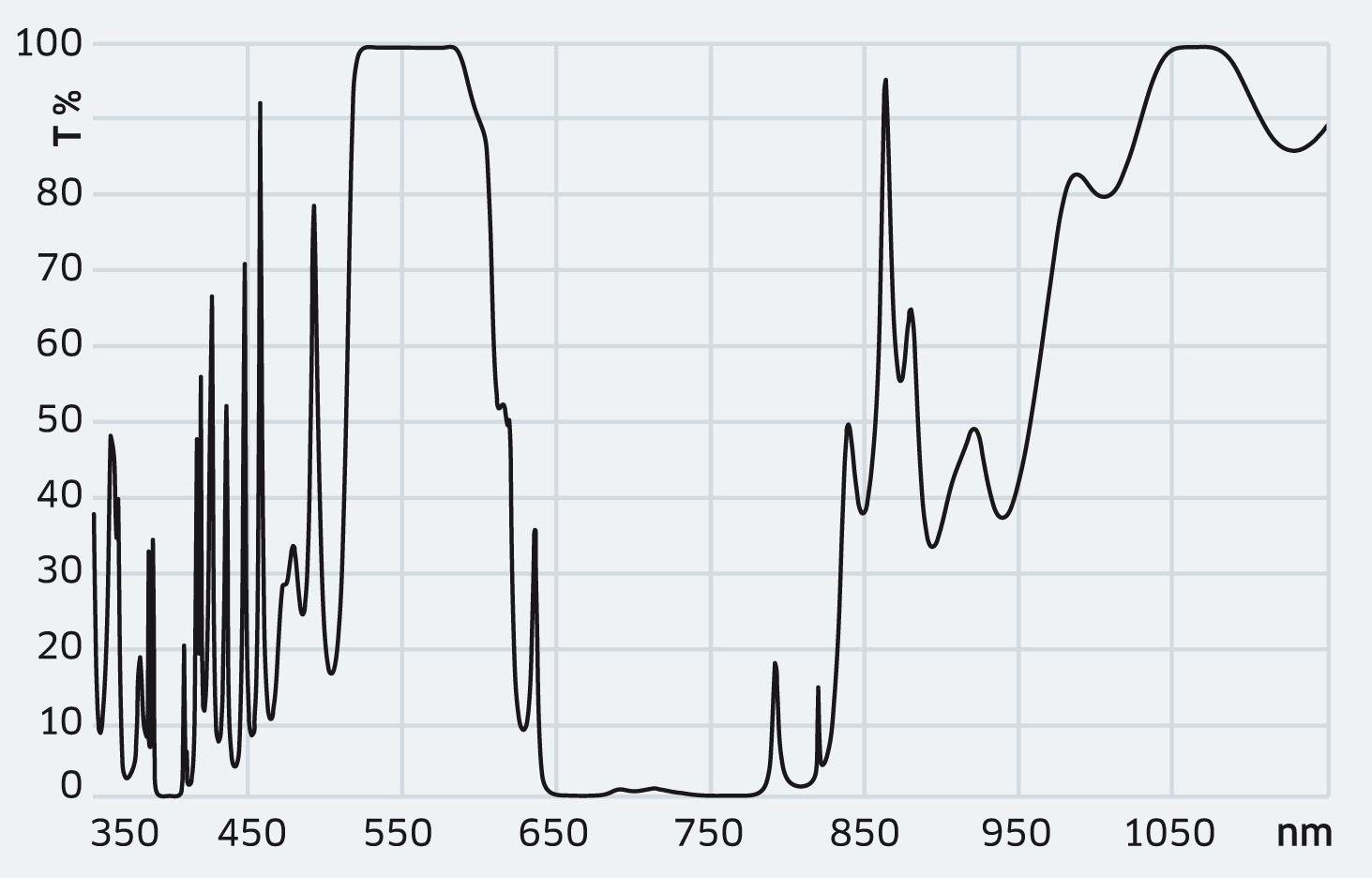
399 nm: R > 99.5%; 532–578 nm: Ravg < 0.5%; 660 + 759 nm: R > 99.8%; 1064 nm: R < 0.5%
(IBS-coating)
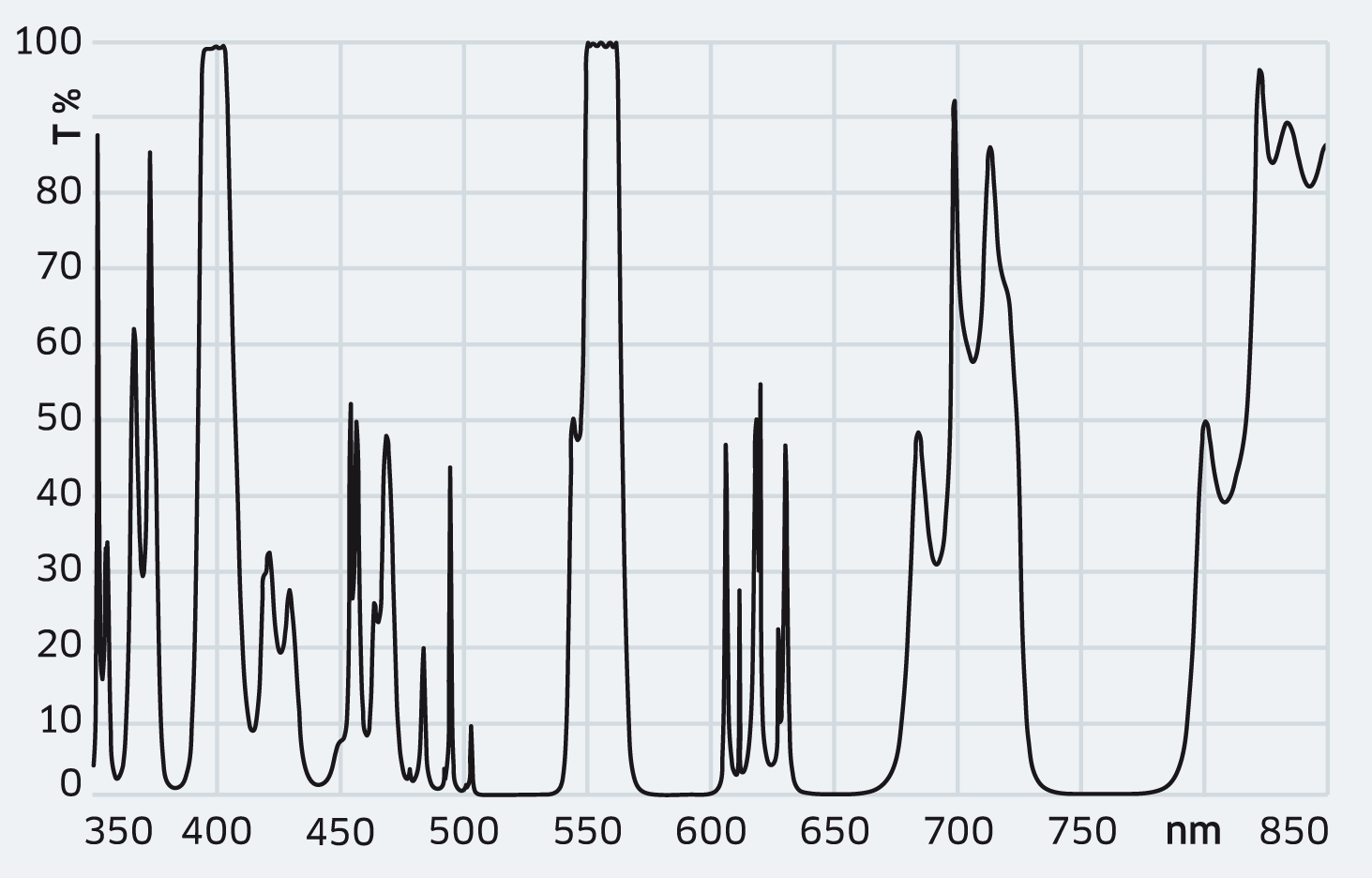
399 nm: R < 3.5%; 532 nm: R > 99%; 556 nm: R < 10% (best effort); 578 nm: R > 99%; 649 nm: R > 99.8%; 759 nm: R > 99.8% (IBS-coating)
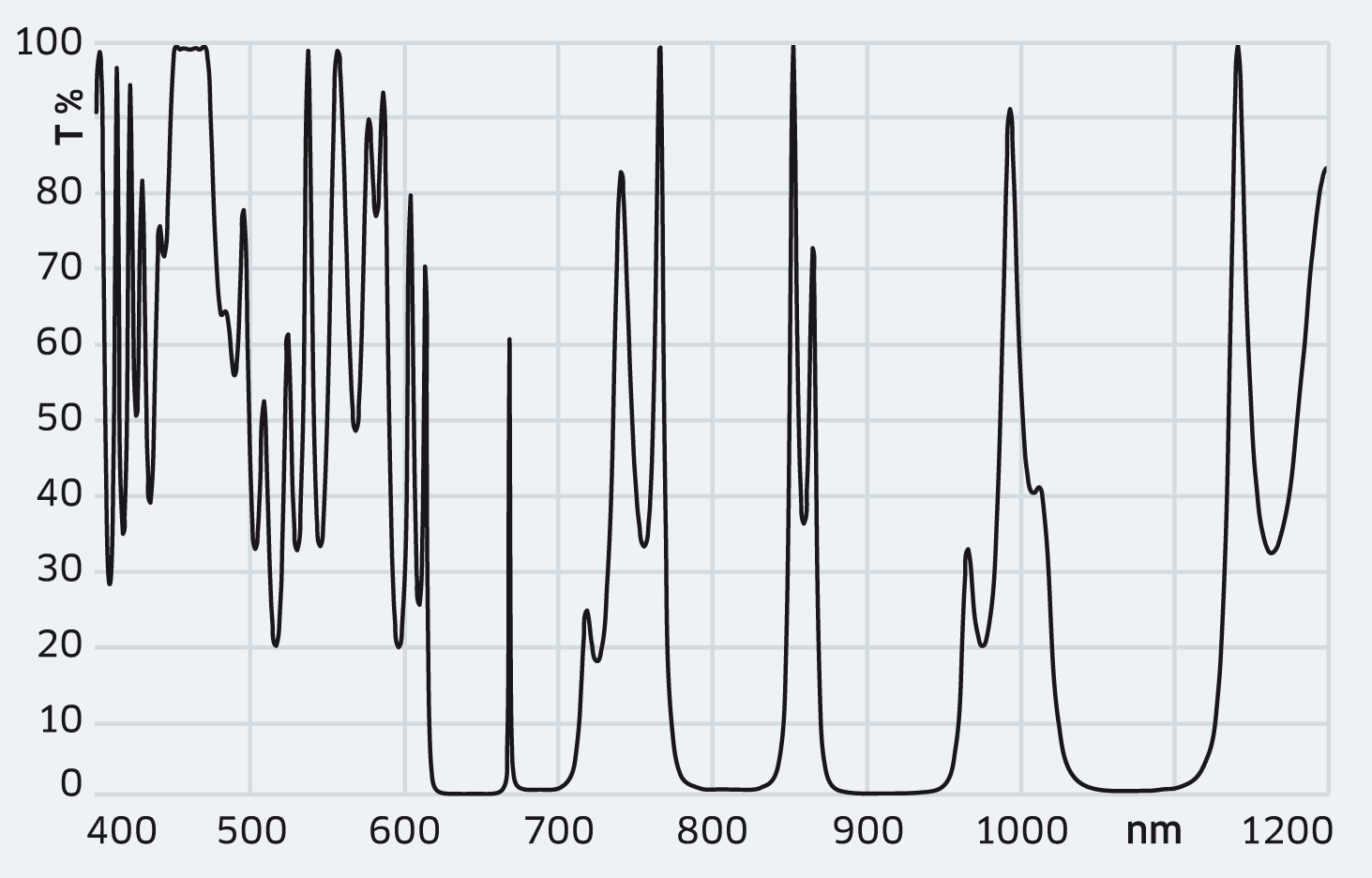
461 nm: T > 95%; 633 nm + 650 nm + 914 nm: R > 99.9%;
689 nm + 813 nm + 1064 nm: R > 99% (IBS-coating)
Every coating type can be optimized
for every
• substrate material
• wavelength
• reflection/transmis-
sion value
• angle of incidence
• polarization
• GDD value
• ...
Alternatively we can create
a totally new design for you.
